
The Real Cost of Driver Turnover — And How to Calculate Yours

Ask a fleet manager what their biggest operational challenge is, and driver turnover comes up almost every time. The American Trucking Associations reports that annual turnover at large truckload carriers exceeds 90% — meaning most fleets are in a near-constant cycle of recruiting, hiring, training, and losing drivers.
But here's what most fleet managers don't do: calculate the actual dollar cost of that turnover for their specific operation. Until you have that number, the investment case for retention-focused technology is always a little fuzzy.
Let's fix that.
Building Your Turnover Cost Model
Replacement costs fall into four categories. Add up your real numbers in each:
Recruiting and advertising costs:
Job board fees, recruiter commissions, referral bonuses
Onboarding and training:
DOT orientation, safety training, equipment familiarization, first 30-day productivity loss
Administrative costs:
HR time, background checks, drug testing, licensing verification, benefits setup
Lost productivity:
Loads not covered or covered at a premium rate while the seat is empty, dispatcher time managing the gap

Industry benchmarks put the total cost of replacing a CDL driver at $6,000–$12,000. For larger fleets with more complex onboarding or specialized equipment requirements, that number is often higher. For a fleet replacing 20 drivers per year at a $9,000 average, that's $180,000 annually — just in turnover costs.
What Drivers Say They Want
Exit interview data and driver survey research consistently surface the same themes:
They want to be treated like professionals, not just monitored
They want reliable, well-maintained equipment
They want fair, transparent dispatch and load assignment
They want their safety concerns heard and addressed
They want feedback that helps them improve, not just penalizes mistakes
Notice something? Nearly all of these are addressable with the right fleet management approach — not just the right technology, but the way that technology is implemented and used.
How OneView™ Supports Driver Retention
Technology alone doesn’t resolve retention, but it plays a critical role in shaping the day-to-day driver experience.
The tools that retain drivers are often the same tools that improve safety and compliance — deployed with a coaching mindset rather than a surveillance mindset.
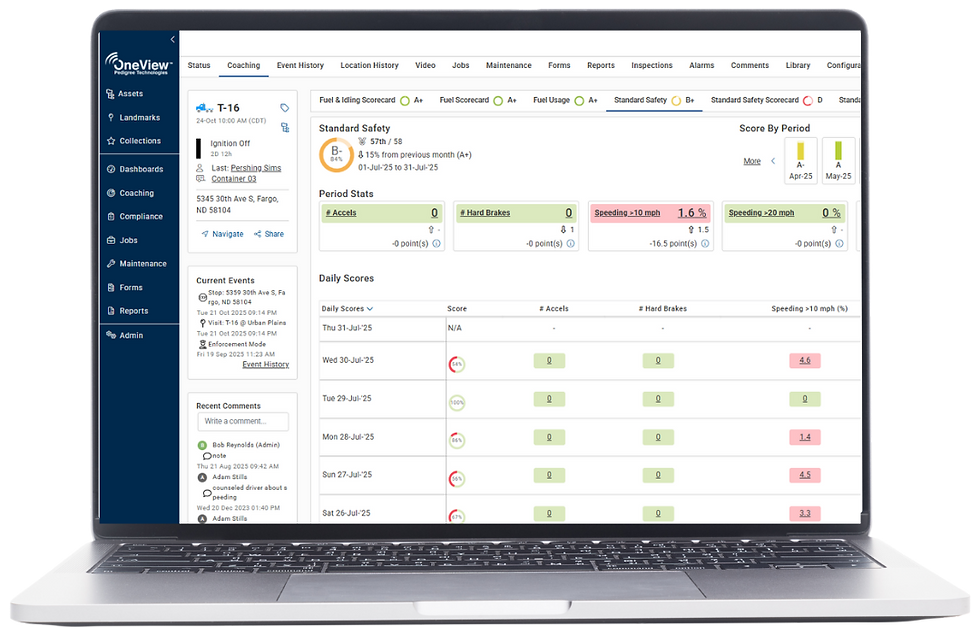
Driver performance insights and scorecards that drivers can see in real time and understand how to improve
In-cab and external cameras that help provide context during incidents and protect drivers in fault disputes
Maintenance visibility and workflows that keep equipment reliable and reduce the breakdowns that frustrate drivers most
Dispatch visibility and routing tools that respect drivers' time and minimize unnecessary waiting
Customizable inspection workflows that make pre-trip compliance easy, not burdensome
When drivers feel supported by their technology rather than surveilled by it, retention improves. And when you can calculate your annual turnover cost, the ROI of investing in that shift becomes very clear.
Talk to our team about how OneView™ supports driver retention. Book a call at pedigreetech.io/demo.